Custom embroidery digitizing for logos, lettering and artwork
Send your artwork and tell us what you are stitching. A digitizer builds your file by hand for your fabric, your size and your machine. You review a digital proof before you order.
- Hand-digitized, never auto-traced
- Digital proof before you order
- Free revisions until you approve
- Rush service when you need it
What is custom embroidery digitizing?
Custom embroidery digitizing is the work of turning your own artwork into a stitch file that an embroidery machine can read. A digitizer chooses the stitch types, sets the density and plans the sewing order, so the design sews out the way your artwork looks on screen.
It is called custom because nothing is traced by software or pulled from a library. Each file is built by hand for one design, one size and one fabric.
On this page
What we digitize for you
Custom means built from scratch for you. If you can send it to us as an image, we can build it in thread. Most of our custom work falls into five groups.
- Logos and wordmarks. Company marks for polos, aprons, uniforms and bags, including logos with small text.
- Lettering and monograms. Names, initials, slogans and team words, in block, script or custom letterforms.
- Mascots and illustrations. Team mascots, badges and drawn artwork that needs more than two or three colors.
- Crests and emblems. Round, shield and badge designs with borders, rope edges and text on a curve.
- Sketches and photos. Hand drawings, kids' art and photos, simplified so thread can reproduce them.
What we do not do
We do not sew garments. We make the stitch file, and your own machine or embroiderer does the sewing. We also do not auto-trace. If a design is too detailed for thread, we tell you and suggest a simpler version before you pay.
Custom digitizing or a ready-made design?
Ready-made embroidery designs are cheap and quick, but they are made for generic artwork, one fixed size and an average fabric. They cannot match your logo, your colors or your garment.
Custom digitizing costs more up front, but the file fits one job exactly. The lettering is your lettering, the size is your size and the density suits your fabric.
Choose a ready-made design for a hobby project where an approximate look is fine. Choose custom digitizing for anything with a logo, a brand color or a customer waiting on the order.
Who orders custom digitizing
Most of our custom work comes from four kinds of customers.
Embroidery shops and decorators
You own the machines and have customers waiting. We build the files, so you can keep your team on the floor instead of at a screen.
Teams, clubs and schools
Crests, mascots and names need to look the same on every jacket and cap. One approved file keeps every order consistent.
Brands and small businesses
A logo on a polo, an apron or a cap has to match your brand. We keep your colors and your lettering true to the artwork.
Hobbyists and online sellers
One design is welcome. There is no minimum order and no software to learn.
How custom digitizing works
Every custom order follows the same four steps. There is no account to set up and no minimum order.
Send your artwork
Fill in the quote form and upload your artwork in any format, even a phone photo of a sketch. Tell us the garment, the size and your machine.
Confirm the details
We reply by phone or email with your price and any questions about fabric, thread colors or size. You approve the price before work starts.
Review your digital proof
A digitizer builds your file by hand and a second digitizer checks it. You see a digital proof, an on-screen preview of the stitched design, before you order.
Approve and sew
Once you approve, we send the final file in your machine's format. If the sew-out needs a change, we revise the file free until it is right.
The stitches we choose for your design
A stitch file is a set of choices. These five decide how your design looks, feels and sews.
A foundation of light stitches sewn first. Underlay anchors the top thread to the fabric, lifts it off the weave and stops it sinking into knits. You never see it, but you see its absence: ragged edges and thin coverage.
Rows of stitches that cover large areas. We set the direction, length and spacing so the surface looks even and the fabric stays flat. Changing direction between neighboring areas gives a design depth without adding a color.
Long, tight stitches that lie side by side for borders, lettering and narrow shapes. Satin gives embroidery its smooth, shiny edge, but it only works within a width range. Wide areas are better as fill.
A single line of short stitches. We use it for fine detail, outlines and the travel between objects. Because it is thin, it needs a steady fabric and a design that does not depend on tiny details.
Thread pulls fabric inward as it sews, so a shape stitched to exact size ends up slightly narrower. We make each shape a little wider than your artwork to cancel that pull, so edges meet and outlines line up.
Before and after: custom digitizing in thread
Each pair shows the original artwork next to the stitched sample. Drag the needle to see what changed.
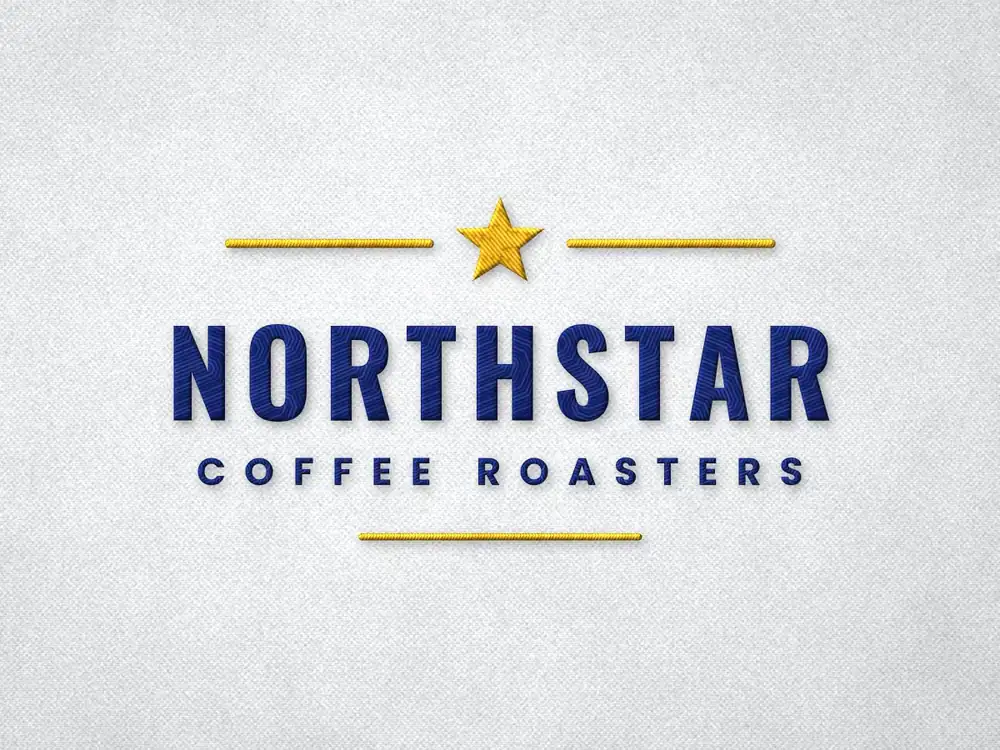
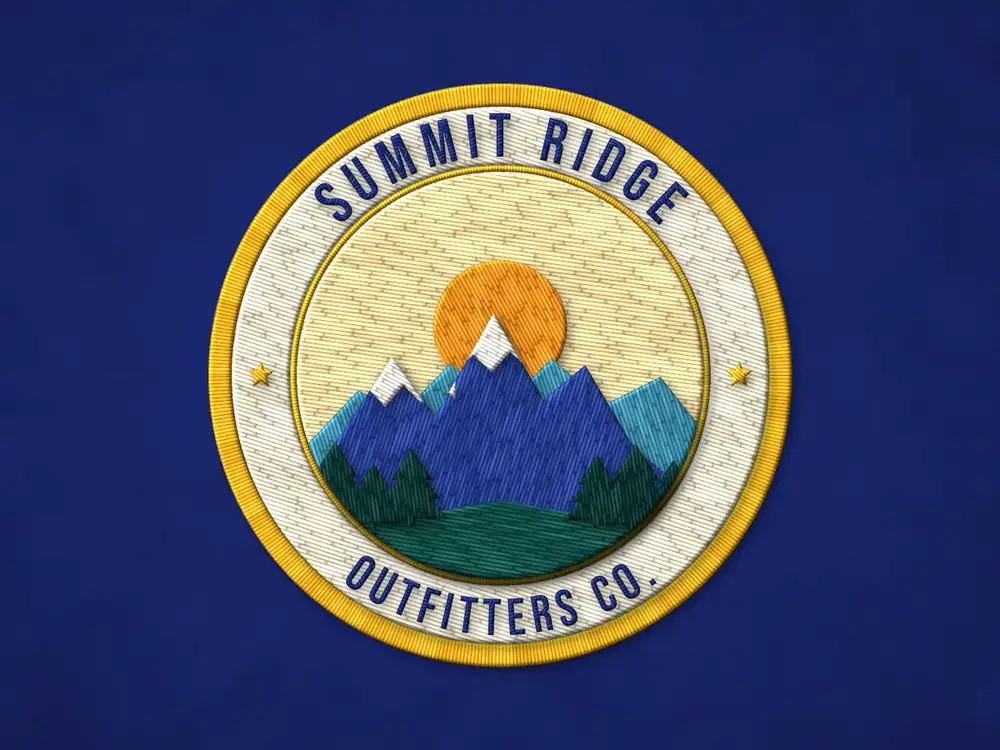
ArtworkStitched
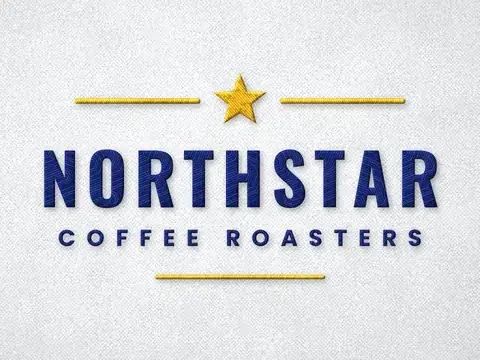
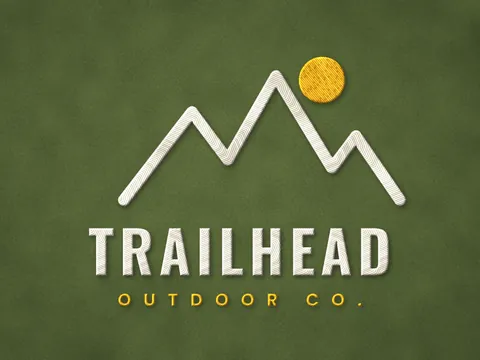
Left chest logo on a polo
At 3.5 inches wide, the work is mostly small text. The thin gold lines in this wordmark had to stay readable on knit fabric.
- Thin lines rebuilt as narrow satin stitches that stay visible.
- Underlay added so lettering sits on the knit.
- Letter spacing tuned to keep small text crisp.
- Size
- 3.5 in wide
- Stitches
- 7,800
- Fabric
- Cotton pique polo
- Files
- DST, PES
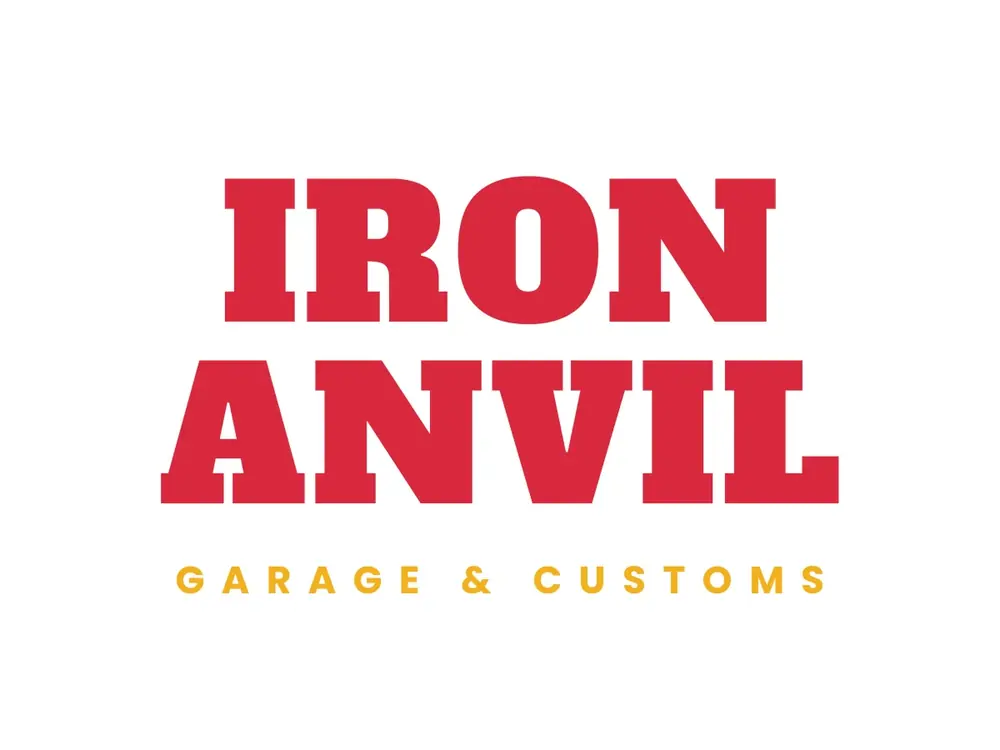
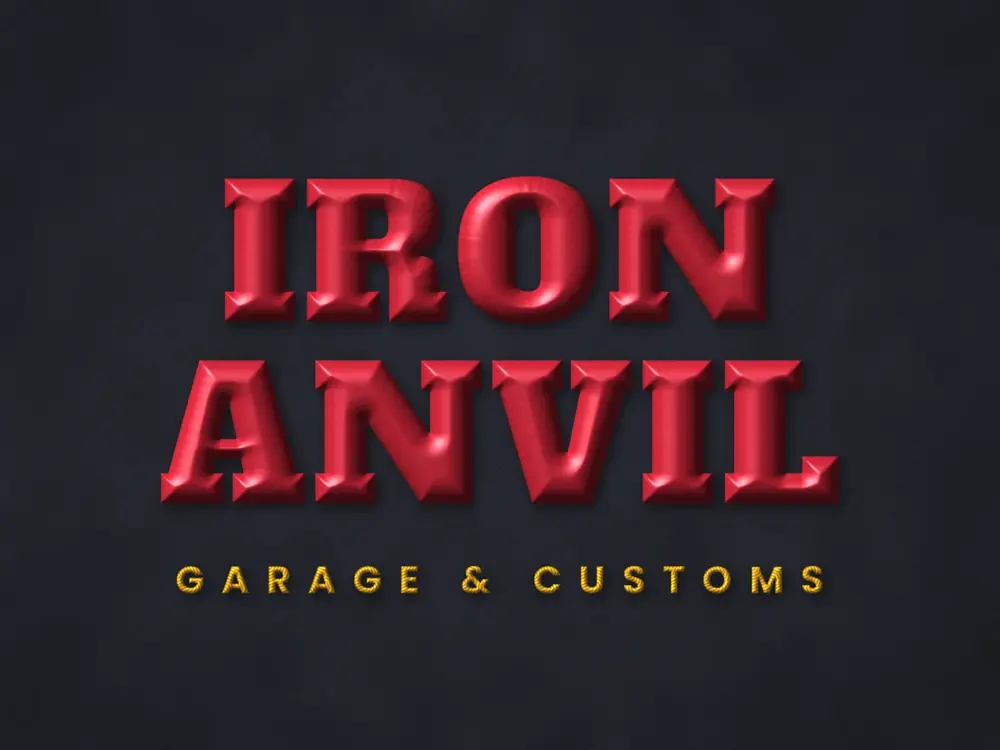
ArtworkStitched
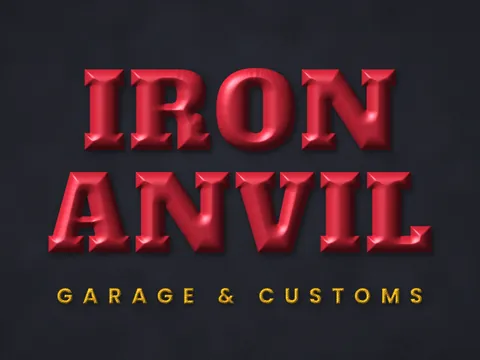
3D puff lettering on a cap
Raised lettering built over foam, with a flat satin line of small text underneath.
- Foam coverage planned letter by letter, with stitches that hide the foam.
- Center-out sewing order keeps the front panel seam from shifting.
- Small text stays flat satin, because puff clogs below a certain size.
- Size
- 4.5 in wide
- Stitches
- 14,200
- Fabric
- Structured twill cap
- Files
- DST
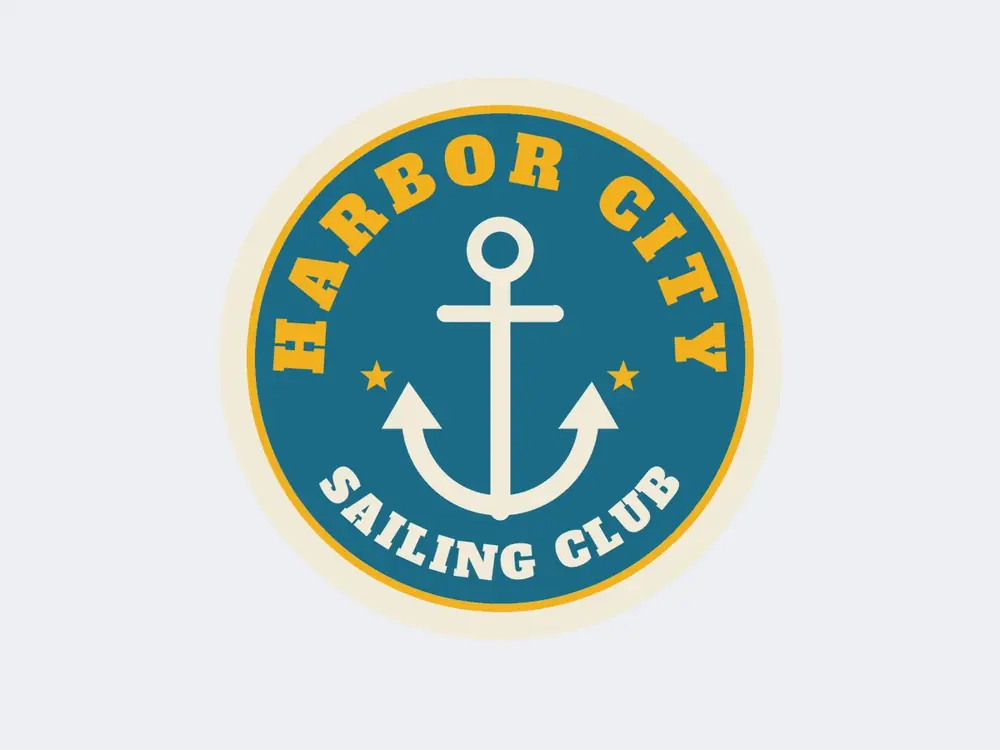
ArtworkStitched
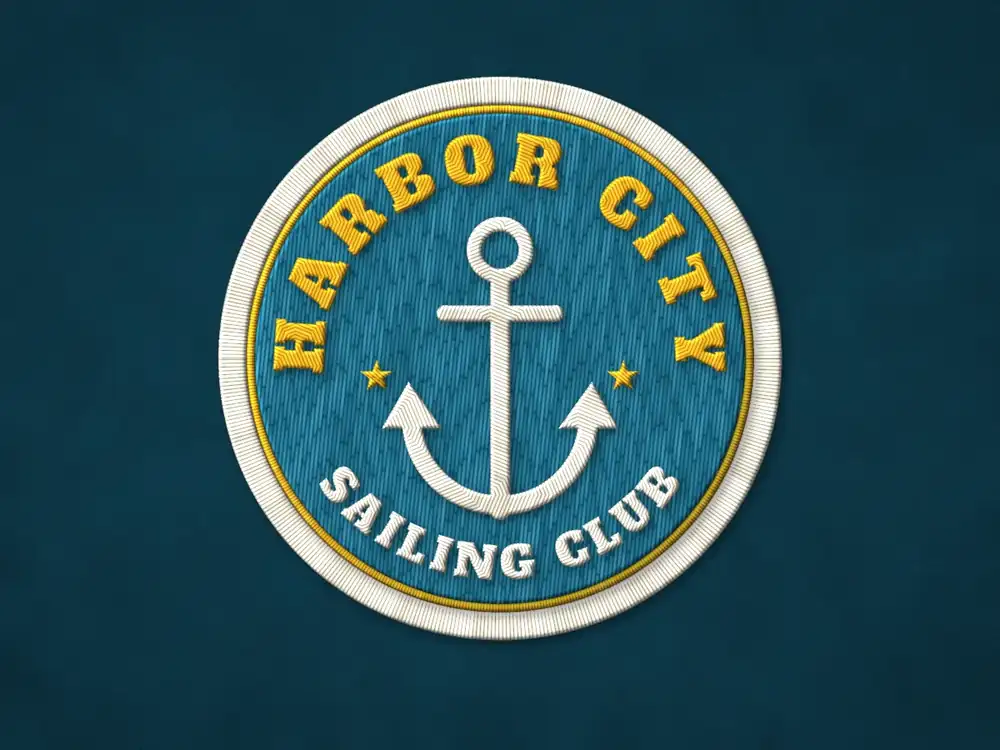
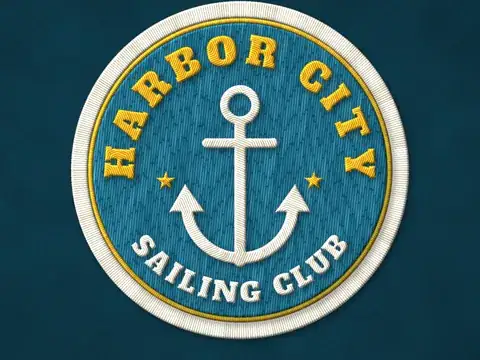
Large crest for a jacket back
A ten-inch crest with lettering, an anchor and a rope border. It had to sew without puckering heavy twill.
- Fills split into zones so heavy fabric stays flat.
- Fewer trims and a smarter sewing order cut machine run time.
- Density tuned to the twill so the needle does not perforate it.
- Size
- 10 in wide
- Stitches
- 46,500
- Fabric
- Heavy twill jacket
- Files
- DST
ArtworkStitched
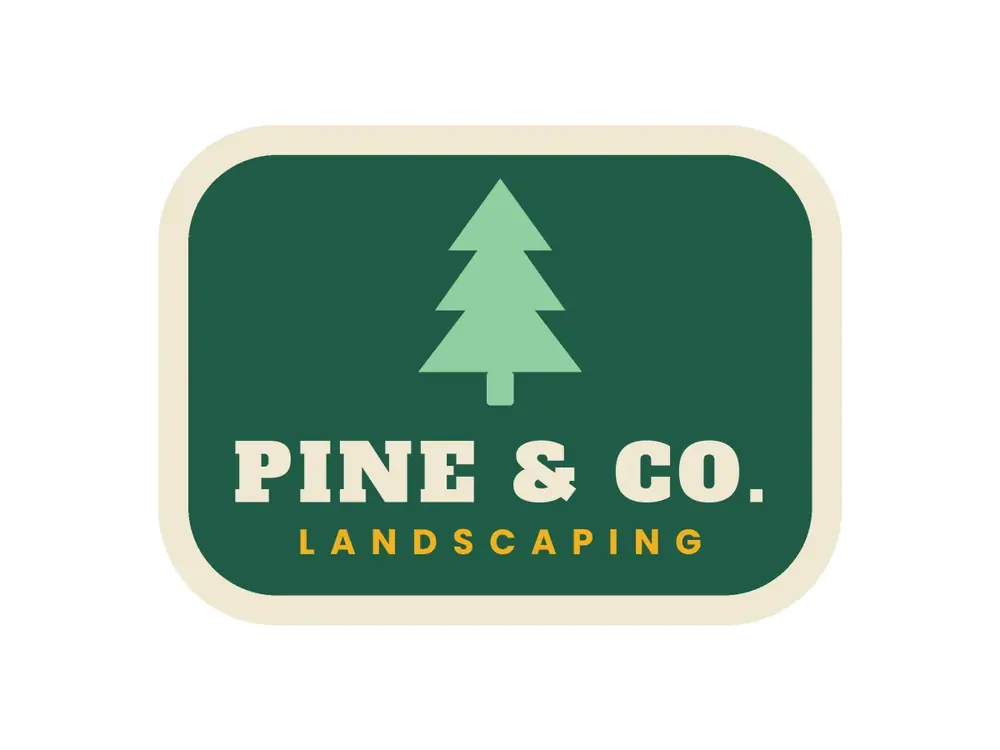
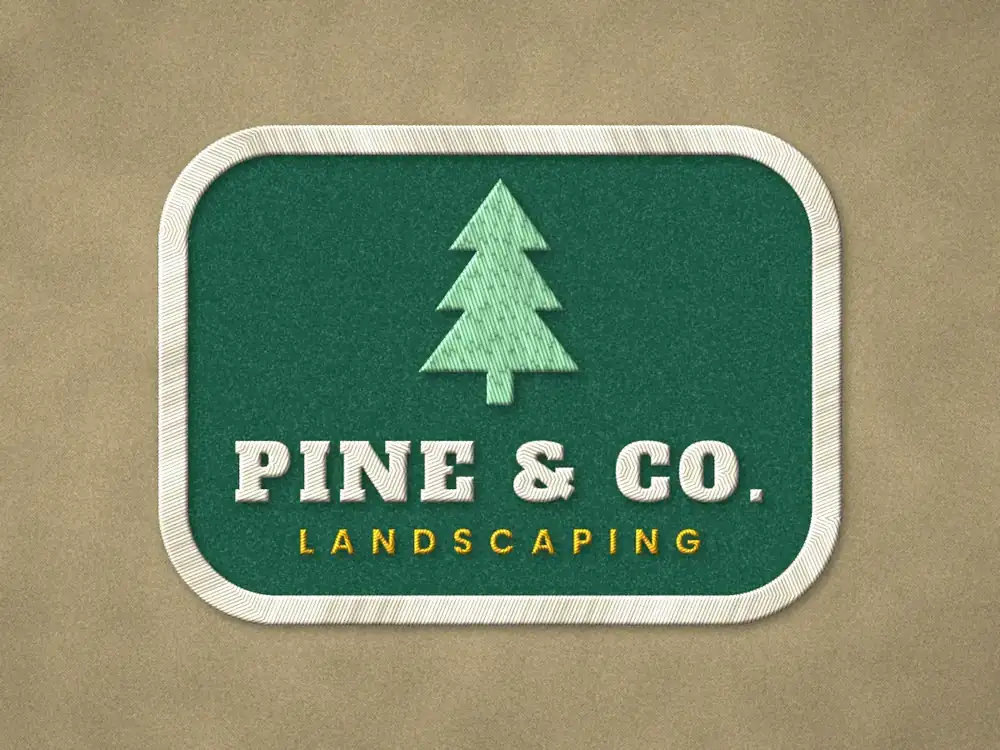
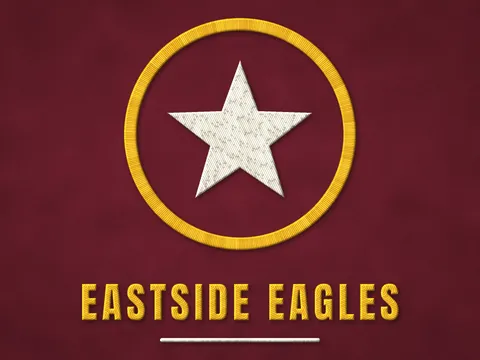
Applique patch with a satin border
A felt shape held by a tack-down line and finished with a satin cover border.
- Placement and tack-down lines set so the felt sits where it should.
- Satin border width matched to the patch size, so the raw edge is covered.
- Lettering simplified so it holds up on fabric.
- Size
- 4 in wide
- Stitches
- 11,300
- Fabric
- Twill backing with felt
- Files
- DST, PES
Sample designs shown for layout preview.
Custom embroidery digitizing prices
The price depends on design size, detail and stitch count. These are starting prices. We confirm your exact price before work begins.
| Design | What it means | From |
|---|---|---|
| Simple | Text or one to two colors, up to about 3 inches wide | $12 |
| Standard | Three to six colors or a small illustration | $18 |
| Detailed | Many colors, gradients or fine detail | $26 |
| Large or jacket back | Quoted by size and stitch count | $35 |
Rush service is available. We quote it with your price.
What changes the price
Two designs of the same width can cost different amounts. These five things move the price.
Size
Bigger designs need more stitches. A 3 inch logo and a 10 inch crest are different jobs, even with the same colors.
Detail
Small text, thin lines and gradients take more time to rebuild so they stay readable in thread.
Colors
Each color change adds a step to the sewing order, so designs with many colors need more planning.
Fabric
Stretchy knits, caps and heavy twill each need their own underlay and density, which adds setup time.
Turnaround
Standard turnaround is about 24 hours. Rush orders move to the front of the queue.
How fabric, placement and size change the file
The same logo needs a different file on a cap than on a towel. Tell us the garment, where the design goes and how wide it should be. Those answers shape every choice we make.
Knits and polos
Pique and jersey stretch and swallow thin stitches. We add underlay and keep small text slightly bolder than the artwork so it stays readable.
Caps
Caps curve and the front panel is stiff. We sew from the center out and plan the order of each object so the panel seam does not shift the design.
Jackets, fleece and heavy twill
Thick fabric holds stitches well but can pucker under a dense fill. We split large areas into zones and tune the density to the weight of the fabric.
Towels and fleece
Pile fabrics let stitches sink. We build a firm underlay and keep fine detail larger than the artwork. Your embroiderer can add a water-soluble topping to hold the pile down.
Size and small text
Satin lettering works best when letters are about 0.2 inch (5 mm) tall or more. Smaller text can still stitch, but we may simplify the letter shapes or switch to a run stitch. If your logo has very small text, we tell you before work begins.
File formats for every machine
We send your design in the format your machine reads. Tell us your model and we will match it.
| Format | Used by | Good to know |
|---|---|---|
| DST | Tajima and most commercial multi-needle machines | The production standard. It holds stitches and color stops, not thread colors. |
| PES | Brother and Babylock | Carries thread color data. |
| EXP | Melco | Common on commercial multi-needle machines. |
| JEF | Janome | Used on Janome home and professional machines. |
| HUS and VP3 | Husqvarna Viking and Pfaff | HUS is the older format, VP3 the newer one. |
| XXX | Singer and Compucon | Check your manual if you are not sure. |
| EMB | Wilcom software | An editable working file, handy for future changes. |
Not sure which one you need? DST is the safest choice for most commercial machines.
What artwork to send
Better artwork means a faster, cleaner file. You do not need to prepare anything special, though.
Best to send
- A vector file: AI, EPS, SVG or PDF
- A large PNG or JPG, at least 1,500 pixels wide
- The colors you want, as thread numbers or color names
- The size you want the design stitched
Also works
- A phone photo of a sketch or drawing
- A photo of an existing embroidered logo
- A screenshot of a logo from a website or social page
- A low-resolution JPG, which we may redraw first
Have a design in mind?
Send your artwork and get a price and a digital proof before you order.
Guides that go deeper
DST, PES, EXP: which embroidery file format should you use?
A simple guide to machine formats and what each one holds.
Pull compensation explained
Why shapes shift when thread pulls the fabric, and how digitizers plan for it.
How much does embroidery digitizing cost?
What drives the price of a stitch file and how to get a firm quote.
Custom embroidery digitizing questions
Can't find your answer? Send a message with the Get a Quote tab and a digitizer will reply.
How much does custom embroidery digitizing cost?
Custom digitizing starts at $12 for a simple design, $18 for a standard one and $26 for a detailed one. Large designs such as jacket backs start at $35. The price depends on size, detail and stitch count, and we confirm it before work starts.
How long does custom digitizing take?
Most designs are ready in about 24 hours. Rush service can be ready in a few hours. Very large or complex designs may need more time, and we tell you when you get your price.
What is the difference between custom digitizing and auto-digitizing?
Auto-digitizing software traces your image and guesses at stitch types. A custom digitizer chooses each stitch type, direction and density by hand for your fabric. That is why custom files tend to sew out cleaner, with fewer gaps, puckers and extra trims.
Can you digitize a photo or a hand drawing?
Yes, with limits. Thread cannot copy a photo pixel for pixel, so we simplify the picture into clear shapes and fewer colors. Send the photo and the size you want, and we will tell you what will stitch well before you pay.
Which file format should I ask for?
Ask for the format your machine reads. DST is the safest choice for most commercial machines. If you use a Brother, Janome or Husqvarna machine, tell us the model and we will match the format.
Do I need to send vector artwork?
No. A vector file such as AI, EPS, SVG or PDF is best, but a clear PNG or JPG works too. You can even send a photo of a sketch. If your artwork is blurry, we can redraw it as vector art first.
What is the smallest design you can digitize?
We can digitize small designs, but very small text limits what thread can show. As a guide, satin letters work from about 0.2 inch (5 mm) tall. Tell us the size you need and we will say what will stitch well.
Can you match my thread colors?
Yes. Send the thread numbers, or tell us the colors in your artwork, and we will set up the color stops to match.
What if the sew-out does not look right?
Send us a photo of the sew-out and tell us the fabric. We find the cause, change the file and send a new version. Revisions are free until you approve the sew-out.
Do you sew the finished design?
No. We make the stitch file. Your own machine or embroiderer sews the design. Every embroiderer needs the file first, and that is the part we handle.
Is there a minimum order, or an account to create?
No. There is no login, registration or minimum order. Click Get a Quote, upload your artwork and tell us what you need. We reply by phone or email, then show you a digital proof before you order.
Is my artwork kept private?
Yes. We use your artwork only to build your files. We never reuse it or share it.
Other digitizing services
Not sure custom digitizing is the right fit? These services cover specific placements and file types.
Logo digitizing
Logo digitizing for embroidery that keeps small text readable on polos, tees and uniforms.
Best forLeft chest and sleeves
From$12
Cap and hat digitizing
Digitizing machine embroidery for caps means sewing from the center out. We cover structured caps, dad hats and beanies.
Best forFront panels and sides
From$14
3D puff digitizing
Bold, raised lettering and shapes, with the right foam coverage and capping stitches.
Best forCaps and hoodies
From$18
Jacket back digitizing
Big designs built to keep heavy fabric flat and run time low.
Best forJacket and sweatshirt backs
From$35
Applique digitizing
Placement, tack-down and cover stitches planned so cut fabric stays put.
Best forTeam wear and letterman jackets
From$18
Patch digitizing
Borders, fills and lettering set up for embroidered patches.
Best forCustom embroidered patches
From$18
Vector art conversion
Turn a blurry JPG or PNG into clean AI, EPS and SVG files. Ready to digitize or print.
Best forPrint, cutting and digitizing prep
From$10
Ready to see your design in thread?
Send your artwork and get a price and a digital proof before you order. There is no account to set up and no minimum order.